
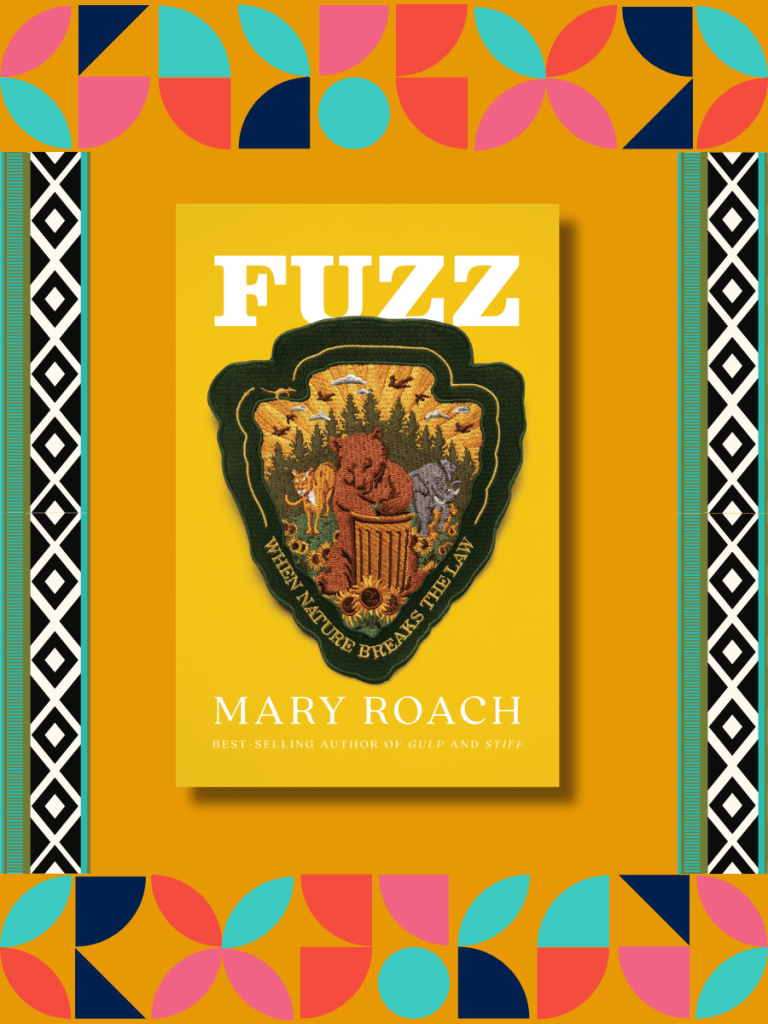
Ever wondered what happens when a bear breaks into your garage or why the Vatican uses lasers to fight birds? Mary Roach’s “Fuzz” delivers answers that will change how you see the animal kingdom forever.
Why I Picked Up This Book
Let’s be honest – I’m absolutely that person who judges a book by its cover. When I spotted Mary Roach’s “Fuzz” with its captivating design (faux embroidery!), I was immediately drawn in. Plus, I’ll admit it: my knowledge of animal conservation was pretty elementary. But what I discovered between those pages completely transformed my understanding of human-wildlife conflicts.
The Book That Made Me Question Everything About “Problem” Animals
Mary Roach has this incredible talent for taking complex information and making it not just digestible, but genuinely entertaining. From the very first chapter, I was hooked by the absurd historical fact that animals were once brought to trial – can you imagine a courtroom filled with defendants who can’t speak for themselves?
What I Learned
1. Animals Were Once Literally Put On Trial
Centuries ago, we actually brought animals to court. Picture this: formal legal proceedings against creatures who had no idea they were being accused of crimes. The absurdity is both hilarious and deeply revealing about human nature.
2. Elephants Can Be Executioners
Roach introduces us to elephants in roles we never imagined – including their use in 1600s Ceylon (modern-day Sri Lanka), as instruments of execution. These gentle giants have a complex relationship with humans that goes far beyond what most of us realise.
3. Bears Have Evolved From Yogi to Dumpster Divers
Those cute picnic-stealing bears from cartoons? They’ve graduated to raiding garbage bins with treats far more tempting than any picnic basket. Urban wildlife adaptation is happening faster than we can keep up.
4. The Vatican Fights Birds With Lasers
Yes, you read that right. The Vatican uses laser technology to deter gulls. It’s both futuristic and oddly medieval at the same time – perfectly capturing humanity’s ongoing battle with nature.
5. “Humane” Pest Control Isn’t Always Pretty
The chapter on animal disposal methods is tough to read but necessary. Roach doesn’t shy away from showing us that our “humane” solutions aren’t always as clean as we’d like to believe.
6. Conservation Started for Selfish Reasons
Here’s the kicker that really got to me: animal conservation wasn’t born from pure altruism. It began as a way to preserve animals for hunting and fishing. Sometimes the truth isn’t pretty, but it’s important.
7. Humans Are Usually Both the Problem AND the Solution
The biggest takeaway? In almost every human-wildlife conflict, we’re not just innocent bystanders. We’re often the root cause – and thankfully, also the potential solution.
What This Book Will Change About Your Worldview
Reading “Fuzz” made me realize how shortsighted human interventions can be. We introduce species to solve one problem, only to create bigger ones. We encroach on wildlife habitats and then label animals as “pests” when they adapt to survive.
But here’s what gives me hope: animals are incredibly resilient. And once we understand the real dynamics at play, we can make better choices.
Why You Should Read This Book Right Now
If you’re someone who cares about the environment, loves learning surprising facts, or just enjoys excellent science writing, “Fuzz” needs to be on your reading list. Mary Roach has a gift for making you laugh while teaching you things that will stick with you forever.
The bottom line? This book will make you a more informed, empathetic person when it comes to sharing our planet with other species. And in today’s world, that’s exactly the kind of perspective we all need.
Take Action: What You Can Do Today
After reading “Fuzz,” I’m inspired to:
- Research local wildlife conservation efforts in my area
- Think twice before labeling any animal as a “pest”
- Support organizations that focus on coexistence rather than elimination
- Share these insights with others who might benefit from this perspective shift
Have you read any Mary Roach books? What surprised you most about human-wildlife conflicts? Drop a comment below – I’d love to hear your thoughts!

 jujucation.com