
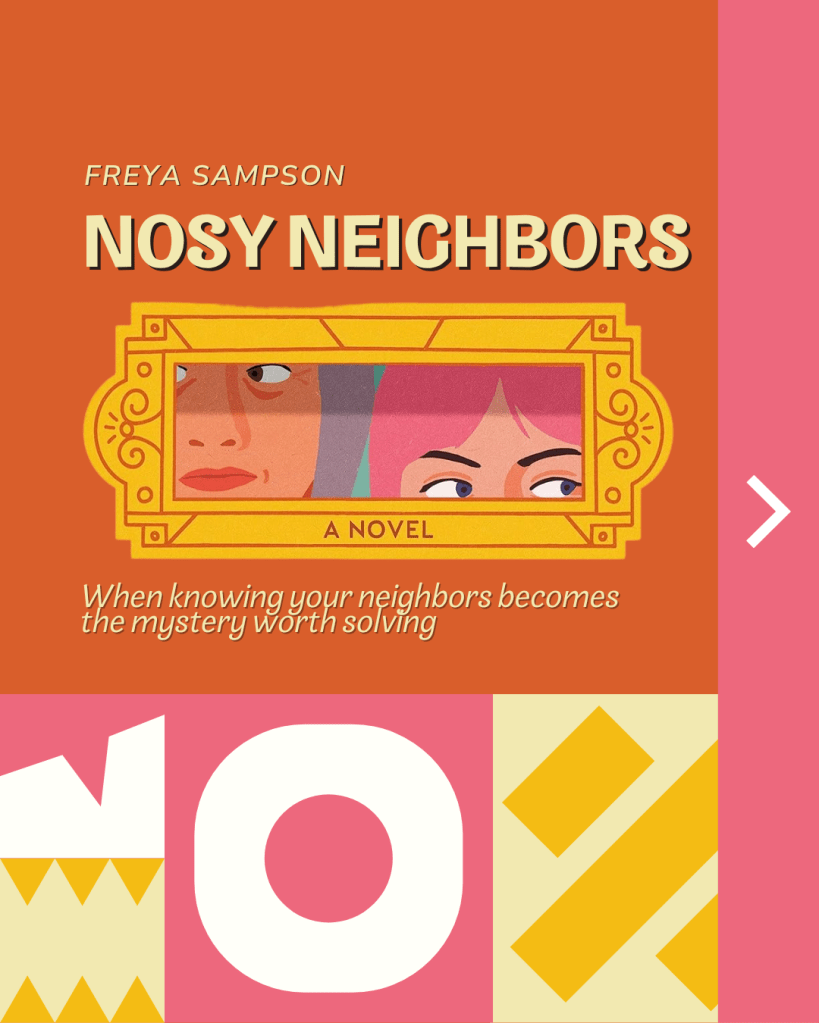
Being surrounded by strangers can be its own kind of solitude. Freya Sampson understands this, which is why Nosy Neighbors feels less like a cosy mystery and more like a gentle intervention about the lives we’re all quietly failing to notice.
The setup is deceptively simple: Shelley House, a crumbling apartment building in England, is slated for demolition. Twenty-five-year-old Kat Bennett, a woman so prickly she makes cacti look cuddly , moves next door to seventy-seven-year-old Dorothy Darling, nursing wounds from a tragedy she can’t quite face. Then the eviction notices arrive, and suddenly these two have to choose: save their home together or lose it alone.
What follows isn’t your typical Nancy Drew situation. This is a mystery where the real investigation is into why we’ve all gotten so comfortable being strangers to the people whose walls we share.
The Mystery That Matters
Yes, there are secrets in Shelley House. Someone’s threatening the building. There’s a suspicious death decades in the past that won’t stay buried. But Sampson is too smart to make this just about whodunit. The real mystery is how people who live inches apart can know so little about each other—and what happens when they finally start paying attention.
Kat isn’t avoiding her neighbors so much as the ghosts she brought back to Chalcot, memories that never learned to stay buried.Dorothy carries her decades-old regret like a stone in her pocket. Neither woman is particularly likable at first, which is precisely why they work. Sampson doesn’t traffic in quirky-adorable characters who exist to warm your heart. These are real people, thorny and difficult and occasionally petty, which makes their eventual connection feel earned rather than inevitable.
The Found Family You Didn’t Know You Needed
The supporting cast at Shelley House reads like the population of any apartment building: the anxious single father and his teenage daughter, the tenant who frequently disturbs the peace,the elderly man (Kat’s landlord) and his adorable Jack Russell terrier, Reggie,the woman with the tumultuous love life and the man with the ill-mannered pit bull named Princess . Sampson has that Fredrik Backman gift for making you care deeply about people you’d probably ignore in real life.
As Kat and Dorothy dig into the building’s secrets, something shifts. Neighbors become allies. Isolation transforms into solidarity. It’s the kind of slow-burn community building that feels radical in 2025, when we’re all more connected and more alone than ever.
What Makes This Work
Sampson refuses to choose between cozy and serious. The book is funny—genuinely, wryly funny in that British way that sneaks up on you. Dorothy’s acerbic observations could peel paint. But it’s also unflinching about grief, addiction, and the weight of choices made decades ago.
The pacing mirrors real friendship: slow at first, occasionally frustrating, then suddenly essential. By the time the mystery resolves (satisfyingly, without neat bows), you realize the plot was never really about saving a building. It was about saving each other.
Who This Book Is For
Read this if you:
- Loved A Man Called Ove and want that same multigenerational grumpiness-to-warmth arc
- Appreciate mysteries where emotional revelations matter as much as plot twists
- Need stories about community organizing and tenant rights wrapped in accessible fiction
- Want complex women who aren’t immediately likable but are always real
- Believe in second chances, even when they arrive at seventy-seven
Skip this if you:
- Need breakneck thriller pacing (this unfolds slowly, deliberately)
- Prefer mysteries heavy on violence or shocking twists
- Don’t have patience for flawed characters making realistic mistakes
- Want escapism without any emotional heaviness
6 Things Nosy Neighbors Teaches About Connection (And Why They Matter)
1. Everyone’s Fighting Battles You Can’t See
The elderly neighbor who seems hostile? She’s drowning in regret from choices made thirty years ago. The young woman who never makes eye contact? She’s barely surviving her own guilt. We judge what we see without considering what’s hidden—and that’s where most of our misunderstandings begin.
2. Forgiveness Isn’t About Forgetting
Both Kat and Dorothy carry crushing “mistakes” they can’t undo. Sampson’s genius is showing that healing doesn’t require erasing the past. It requires facing it, speaking it aloud, and choosing to live forward anyway. Some wounds scar. That doesn’t mean they have to define you.
3. Found Family Forms in Unlikely Soil
The residents of Shelley House didn’t choose each other. They were thrown together by economics and circumstance. But when external threats emerge, they discover something revolutionary: proximity can become a purpose if you’re willing to actually show up.
4. Collective Action Starts With Conversation
The book’s plot about fighting eviction isn’t window dressing. Sampson shows how individual isolation keeps power structures intact. When neighbors start talking, sharing information, organizing together? That’s when change becomes possible. It’s a quiet political statement dressed as a cozy mystery.
5. Mysteries Can Comfort While They Investigate
We’ve been trained to think mysteries must be dark, violent, or shocking. Nosy Neighbors proves you can have stakes, suspense, and secrets without sacrificing warmth. Sometimes the most compelling question isn’t “who did it?” but “how do we rebuild what’s broken?”
6. It’s Never Too Late to Start Over
At twenty-five, Kat thinks her life is already ruined. At seventy-seven, Dorothy believes she’s too old for new beginnings. They’re both wrong. Sampson’s most radical idea? That transformation isn’t age-restricted. Change is always available to people brave enough to reach for it.
The Last Knock on the Door
By the time you turn the last page, Nosy Neighbors has done something quietly miraculous—it makes you want to knock on the door next to yours. Freya Sampson reminds us that connection doesn’t arrive as a grand gesture but as a cup of tea left on a doorstep, a shared worry about the rent, a conversation that starts with irritation and ends in understanding. It’s a story that believes in people, even the prickly, defensive, impossible ones. And in a world that keeps teaching us to keep to ourselves, that belief feels almost radical.

 jujucation.com