
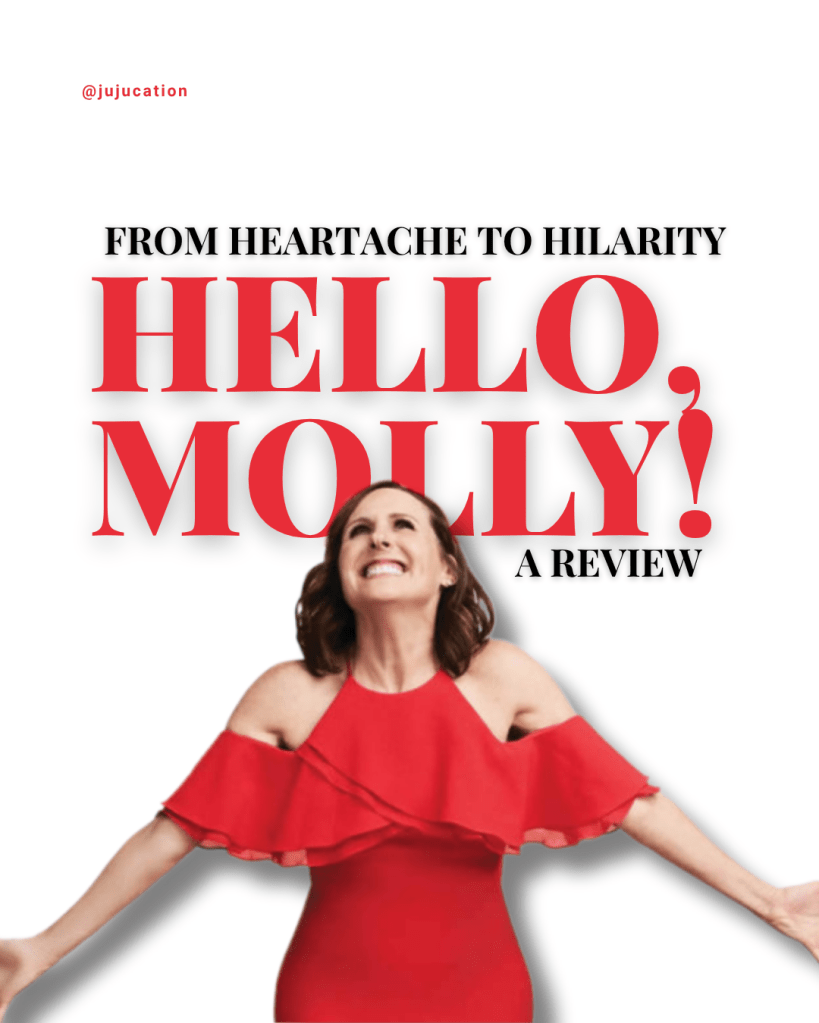
The Thing About Molly Shannon
Here’s what you need to understand about Molly Shannon before you crack open this book: she was never supposed to make it. Not in the morbid sense (though there’s that too—the car accident should have killed her), but in the way women who are too loud, too physical, too weird aren’t supposed to succeed in comedy.
And yet.
Shannon spent six seasons on Saturday Night Live creating characters so bizarre and specific that you either got them immediately or you didn’t get them at all. Mary Katherine Gallagher, the Catholic schoolgirl with an armpit-sniffing habit and dreams of being a superstar. Sally O’Malley, the fifty-year-old woman in a red tracksuit who could kick and stretch and kick. These weren’t women you’d see in a sitcom. They weren’t even women you’d see in real life. They were something else entirely—creatures of pure, unleashed id.
“Hello, Molly!” explains where those creatures came from. The answer, unsurprisingly, involves tragedy. But surprisingly, it also involves permission.
When Your Origin Story Starts with a Car Crash
Shannon doesn’t bury the lede. The memoir opens with the accident—her father at the wheel, possibly drunk, definitely distracted. Four-year-old Molly survives. Her mother, baby sister Katie, and cousin Fran do not.
What follows isn’t a Lifetime movie about overcoming adversity. It’s stranger and truer than that. Shannon’s father, destroyed by grief and guilt, doesn’t become a cautious parent. He becomes the opposite—a man who encourages mischief, applauds rebellion, and essentially raises his surviving daughters like they’re performers in his personal variety show.
“The Mama Rose to my Gypsy Rose,” Shannon calls him. Which is perfect because it captures both the stage-parent pushiness and the underlying desperation. He needed her to be okay, to be special, to be something so extraordinary that it justified what happened.
The most uncomfortable truth in the book? It worked.
Not in a healthy, therapist-approved way. But in the way that sometimes broken people create broken systems that somehow produce functional outcomes. Shannon’s father taught her fearlessness. He taught her to trust her instincts. He taught her that being weird was better than being boring.
He also drank too much, made terrible decisions, and occasionally terrified her. The book doesn’t resolve this contradiction because you can’t. You can only hold both things at once and call it love.
7 Things This Book Taught Me About Life, Comedy, and Crashing Through Chairs
1. Grief Doesn’t Have an Expiration Date—And That’s Fine
Shannon cycles through sadness about her mother’s death throughout the entire book. At four. At fourteen. At forty. She doesn’t present this as a failure to heal. It’s just how it is when someone you needed is gone before you can remember them clearly.
The relief in reading this as someone who’s lost people: you don’t have to be “over it.” You just have to keep living.
2. Sometimes the Weird Kids Win
When Shannon auditioned for SNL the first time, someone told her Mary Katherine Gallagher was “too weird” and “too dirty.” She performed a different, safer character. She didn’t get hired.
For her second audition, she brought Mary Katherine back. Lorne Michaels hired her immediately.
The lesson isn’t “never listen to feedback.” It’s “some feedback is designed to make you smaller, and you need to learn which kind that is.”
3. Your Parents Can Be Both Your Biggest Problem and Your Greatest Gift
Shannon’s father was a mess. He was also her most enthusiastic supporter, her improvisation partner, and the person who believed she could be a star when she was waitressing in her thirties with no prospects.
The book doesn’t ask you to pick a side. It asks you to accept that people contain multitudes, especially the people who raised you.
4. Physical Comedy Is a Serious Art Form
Shannon talks about throwing her body into chairs, walls, floors with the kind of technical precision usually reserved for discussions of Shakespearean delivery. There’s craft in making falling look spontaneous. There’s years of practice in knowing exactly how to hit your mark while appearing completely out of control.
Reading this made me retroactively appreciate every bruise she must have earned making America laugh.
5. The Entertainment Industry Rewards Persistence as Much as Talent
Shannon worked as a waitress for years. She performed in stage shows that nobody saw. She networked relentlessly, called people back, made herself available, and refused to disappear even when the industry ignored her.
This isn’t inspiring in a “you can do it too!” way. It’s sobering. Talent matters. But stubborn refusal to quit might matter more.
6. You Can Build a Different Kind of Family
Shannon’s SNL stories reveal how performers create temporary families in high-pressure creative environments. Will Ferrell, Cheri Oteri, Tracy Morgan, Tina Fey—these weren’t just colleagues. They were the people who understood what it meant to want something this badly.
If your biological family is complicated (and whose isn’t?), you’re allowed to find your people elsewhere.
7. Saying Goodbye Is a Privilege
The chapters about Shannon’s father’s final illness are the emotional center of the book. She was there. She said what needed saying. She held his hand.
Not everyone gets that. And Shannon knows it. The memoir doesn’t offer false comfort about death, but it does suggest that presence—being there, showing up, witnessing—matters more than we think.
What Makes This Different from Other Celebrity Memoirs
Most celebrity memoirs are either inspirational (“I overcame everything and so can you!”) or gossipy (“Here’s what really happened backstage with [Famous Person]”). Shannon’s memoir refuses both templates.
Yes, there are SNL stories—meeting Whitney Houston, working with Adam Sandler, the competitive dynamics of the writer’s room. But they’re not name-droppy. They’re about what it felt like to be in those rooms, doing that work, with those people.
And yes, there’s inspiration—Shannon built an extraordinary career and a seemingly happy life despite catastrophic early loss. But she never promises you can do the same. She just shows you what she did, with all the luck and privilege and random chance that helped her along the way.
The writing itself, shaped by co-author Sean Wilsey, has an unusual quality. It’s conversational without being chatty. Direct without being flat. Shannon sounds like herself—enthusiastic, warm, occasionally heartbroken—without performing the way she does on screen.
It’s the difference between watching someone do a character and listening to them tell you why they created that character in the first place. Both are interesting, but one goes deeper.
Who This Book Is Really For
This memoir works best for:
- People who’ve lost someone early and never quite figured out how to talk about it. Shannon gives you vocabulary for carrying grief without collapsing under it.
- Creative people stuck in the “am I talented enough?” spiral. The book proves that persistence, weirdness, and strategic fearlessness matter as much as raw talent.
- Anyone who loved SNL in the late ’90s and wants context for those performances. You’ll never watch Mary Katherine Gallagher the same way again.
- Readers tired of memoirs that tie everything up with inspirational bows. Shannon’s life doesn’t resolve. It continues, messily, with joy and sadness coexisting.
- Women who’ve ever been told they’re “too much.” Shannon built a career on being aggressively, unapologetically too much. It’s validating.
Who Can Skip It
If you want pure comedy with no emotional depth, look elsewhere. If you’re seeking detailed career advice or business insights, this isn’t that book. And if you prefer memoirs that stay safely in one emotional register—all funny or all sad—Shannon’s refusal to pick a lane might frustrate you.
The Final Word
“Hello, Molly!” succeeds because Shannon understands something most memoirists don’t: you don’t have to resolve your traumas to write about them honestly. You just have to be willing to show the reader how you’ve learned to live with them.
The book is sad. It’s also funny. It’s inspiring without being prescriptive. It’s specific to Shannon’s bizarre life while somehow feeling universal in its emotional truths.
I finished listening to it in two sittings, cried twice, laughed more times than I counted, and immediately wanted to call my parents. That’s probably the best review I can give any book.
If you’ve ever wondered what it costs to make people laugh—really laugh, the kind that comes from throwing your entire self at the world without a safety net, this memoir has your answer. It costs everything. And somehow, if you’re lucky and stubborn and weird enough, it might also give you everything back.
Just don’t expect it to be easy. Or neat. Or anything other than exactly what it is: the truth, told with compassion, about building a life from broken pieces and refusing to pretend they ever fully mend.
Rating: 4.7/5 stars
Available everywhere books are sold. Read or listen to it. Tell someone you love them. Maybe throw yourself at a folding chair (metaphorically) and see what happens.
Have you read “Hello, Molly!”? What did you think? Let me know in the comments below.

 jujucation.com