
Why Rosie Danan’s latest romance is essential reading for anyone who’s ever loved a fictional world more than their real one
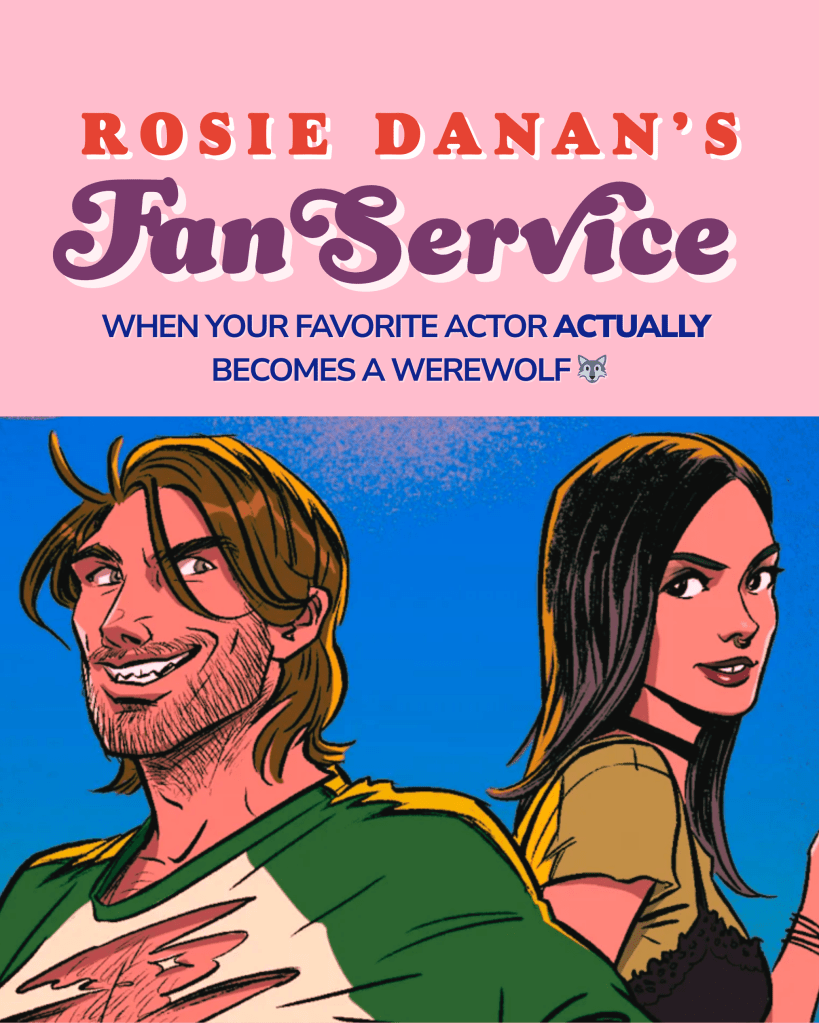
My first 5-star romance in longer than I’d like to admit is a paranormal love story about a washed-up actor who mysteriously transforms into a werewolf. If that premise sounds absurd, you’re not wrong—but Rosie Danan treats it with such emotional intelligence that the absurdity becomes beside the point.
Fan Service understands something most narratives miss entirely: the courage required to care deeply about things the world has decided don’t matter. Fan forums. Discontinued television shows (Pushing Daisies, anyone?). The mythology of fictional werewolf detectives. And in understanding this, Danan has created the paranormal romance that finally takes fandom seriously.
What Happens When Fantasy Becomes Reality
Alex Lawson has built something impressive: the internet’s largest fan community for The Arcane Files, a defunct CW werewolf show. She’s moderator, archivist, and resident expert on thirteen seasons of supernatural lore. What she hasn’t built is a life beyond her computer screen. Between caring for her aging father and working as a veterinary nurse in small-town Florida, she exists as a stranger in her own geographic community.
Devin Ashwood, the show’s former star, is watching his forties arrive alongside career oblivion. Things reach a new low when he wakes naked in the woods with no memory of the previous night and growing evidence of something impossible: he may have actually transformed into a werewolf.
Desperate and out of options, Devin tracks down the one person who might understand what’s happening. The woman whose passion for his show rivals his own former commitment to it. The woman who also happens to harbor deep resentment toward him for mocking her costume at a convention years earlier.
What follows is a month-long arrangement: Alex agrees to help Devin learn to control his transformation before the next full moon. What begins as a transaction becomes something far more complicated when two people who’ve spent years hiding behind carefully constructed personas discover that being genuinely known might be worth the risk.
5 Reasons Fan Service Should Be Your Next Read
1. It Validates Fandom as Legitimate Community and Coping
Unlike countless narratives that treat passionate fan engagement as something embarrassing to transcend, Danan renders it as what it actually is for many people: a legitimate psychological and social necessity.
When Alex’s father faced a health crisis, The Arcane Files provided structure, meaning, and community. The show wasn’t escapism to overcome. It was a survival mechanism and genuine connection. What Alex built online isn’t less real than what exists in physical space. For many readers who’ve found belonging in digital communities, this validation will feel deeply personal.
The novel invites us to examine our own passionate interests not as alternatives to real life but as indicators of what genuinely matters to us and what community looks like when we’re brave enough to claim it.
2. The Werewolf Element Is Actually About Vulnerability
The paranormal aspects function less as fantasy scaffolding and more as extended metaphor for intimacy. Devin’s struggle to control his wolf (to prevent it from overwhelming his human judgment) parallels both characters’ efforts to allow their authentic selves to emerge without being consumed by fear.
Particularly brilliant is Danan’s use of werewolf physiology. Heightened scent perception, possessive instincts, emotional sensitivity. When Devin becomes attuned to Alex’s every shift in mood, it’s fundamentally about recognizing another person so completely that hiding becomes impossible.
This is what genuine intimacy requires: the courage to be completely legible to another person, knowing they might reject what they see.
3. Both Characters Must Actually Change
Too many romance narratives resolve through one character simply accepting the other’s worldview. Fan Service demands more. Both Alex and Devin arrive with extensive emotional baggage and defense mechanisms that have outlived their usefulness.
Alex’s caustic wit, her deliberate outsider presentation, her armor of tattoos and piercings? These aren’t flaws to be corrected. They’re reasonable responses to a world that consistently undervalued her contributions. But her inability to advocate for herself, her assumption that being known requires surrendering identity, her fear of genuine visibility: these need examining.
Devin’s golden retriever charm masks emotional stunting from a childhood spent on film sets being raised by adults who treated him as commodity. His assumption that his needs automatically supersede everyone else’s, his terror of genuine connection, his performance of celebrity without the emotional infrastructure to support it: these demand transformation.
The novel’s resolution requires both characters to risk being seen clearly, without performance or projection. Neither becomes a different person. Both become more honest versions of themselves.
4. The Writing Knows Exactly What It’s Doing
Danan’s prose is tight in the way that suggests extensive revision. Every scene earns its place. Every joke lands without overexplaining itself. Every moment of vulnerability emerges organically from character rather than plot requirement.
The dialogue crackles with the particular rhythm of two intelligent people testing boundaries through humor before risking genuine confession. The intimate scenes achieve something difficult: they’re romantic while remaining emotionally grounded, existing as natural extensions of growing intimacy rather than obligatory genre requirements.
Danan brings observational sharpness about contemporary celebrity culture and internet dynamics that requires both intelligence and generosity toward human absurdity. But she also brings unexpected tenderness in how she treats both protagonists’ wounds. Their defense mechanisms aren’t ridiculed. They’re understood as reasonable responses to pain, then gently questioned about whether they’re still serving their original purpose.
5. It Treats Age and Experience as Assets
Both protagonists are in their thirties and forties, carrying the particular exhaustion of people who’ve tried certain approaches to life and watched them fail. They’re old enough to have regrets, established enough to have something to lose, experienced enough to recognize when something genuine is happening.
The novel doesn’t treat Alex’s age as an obstacle to overcome or deadline approaching. It’s simply the reality of who she is: someone with history, with established patterns, with valid reasons for her caution. Devin’s age similarly functions as context rather than crisis. He’s not desperately clinging to youth; he’s finally developing the emotional maturity his chronological age should have granted him decades earlier.
For readers tired of romance narratives that treat women over thirty as though their lives have ended, this will feel refreshing.
Who Should Read This (And Who Should Skip It)
Perfect for you if:
- You’ve ever felt more yourself in an online community than your physical one
- You appreciate romance that validates rather than ridicules obsessive knowledge of fictional universes
- You enjoy witty, banter-heavy dialogue with genuine emotional stakes underneath
- You want contemporary stories that acknowledge real anxiety about aging, career failure, and the gap between public personas and private selves
- You’re drawn to enemies-to-lovers dynamics where both characters must genuinely change
Skip this if:
- You need paranormal romance with extensive worldbuilding and systematic supernatural rules (the werewolf element remains largely metaphorical)
- You find slow-burn romance frustrating (the sexual tension takes time to ignite)
- You prefer your protagonists in their twenties
The Final Verdict
Fan Service operates on multiple levels simultaneously. As escapist romance, as cultural commentary on fandom, as exploration of how celebrity mythology damages both idols and admirers, and as surprisingly sophisticated meditation on what it means to be genuinely known.
The novel’s greatest strength is its refusal to treat either protagonist’s passions as silly or worth transcending. Devin’s desire to revive his show remains important even after he finds love. Alex’s expertise and investment in fandom carries genuine value and doesn’t need redemption through romantic attention. They’re both better people for knowing each other, but the premise that you’re incomplete without romance never actually becomes the text’s truth.
For readers tired of narratives that dismiss fandom, minimize online communities, or treat passionate investment in fictional worlds as something to overcome, Fan Service offers genuine validation. It’s a book that knows its audience (often people who’ve felt marginal in their communities while central in the digital spaces they’ve inhabited) and celebrates rather than ridicules that experience.
The writing is assured. The humor lands. The romantic moments feel earned. The ending manages to be both surprising and utterly inevitable. Most importantly, by the final page, you’ll believe these two specific people needed each other in this specific moment.
Which is, after all, the entire point of romance fiction.
Rating: ★★★★★
Have you read Fan Service? What did you think about Danan’s treatment of fandom culture? Share your thoughts in the comments below.

 jujucation.com