
I grew up obsessed with First Wives Club. Not just the movie, but that whole vibe of women being messy, loud, and unapologetically themselves. Diane Keaton especially had this thing where she owned her weirdness completely.
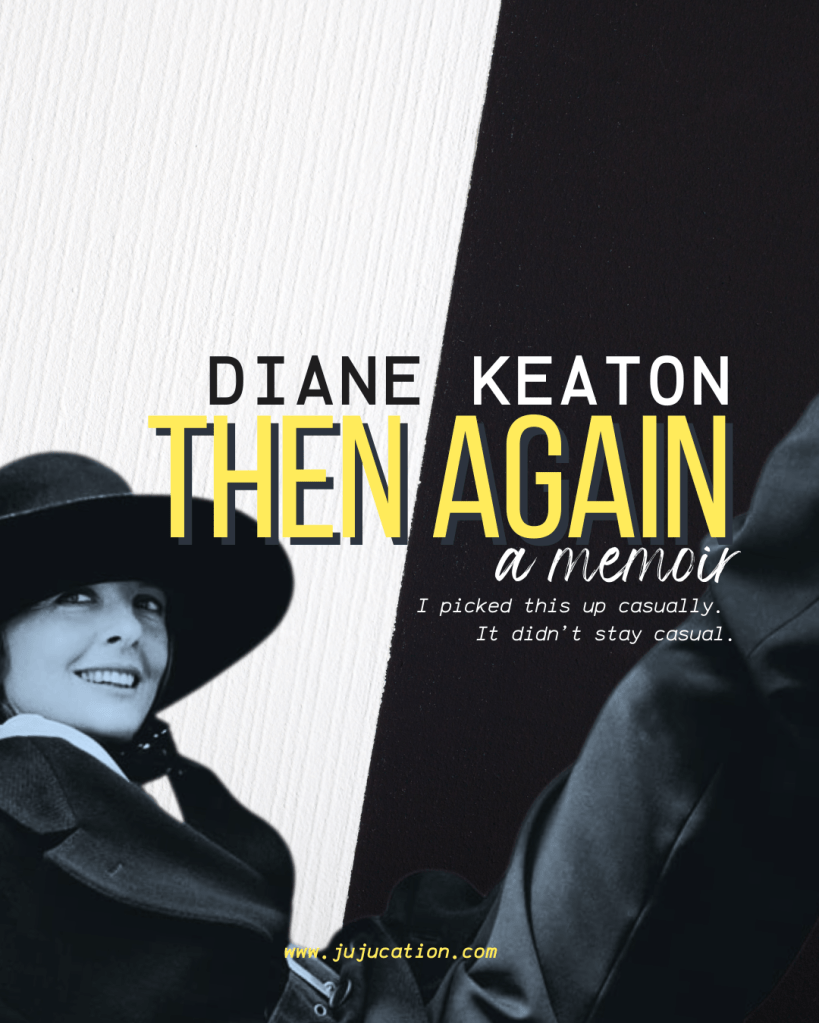
So when I heard she died, I spiraled down a late-night internet rabbit hole about mortality and our icons not lasting forever. That’s how I ended up ordering her memoir, Then Again. Totally normal coping mechanism, right?
It arrived during one of those phases where you’re circling all the Big Family Questions. Like who was my mom before she became my mom? Did I actually become myself or just what she needed? The kind of stuff that hits you while you’re folding laundry at midnight.
Here’s what got me: Diane literally reads her late mother’s private journals (decades of them) and shares what she finds. It’s either incredibly brave or completely boundary-free, but I’m going with brave.
The wild part is that reading about her trying to understand her mother made me confront my own stuff. This isn’t some celebrity memoir you read for gossip. It’s the kind you read because you’ve loved your parents, resented them, wondered about them, and maybe feared becoming them, all at the same time.
What Makes This Memoir Different
Most celebrity memoirs are either humble-bragging disguised as vulnerability or trauma dumps disguised as inspiration. This is neither. Keaton uses her mother Dorothy’s 85 journals as a co-narrator, creating this gorgeous, heartbreaking duet between a daughter trying to understand her Oscar-winning life and a mother who never got to live hers.
Dorothy wasn’t a monster or a saint. She was a creative woman born in the wrong era, pouring all her unfulfilled writer-photographer-dreamer energy into her daughter. Diane became everything Dorothy wanted to be. Which sounds beautiful until you realize: whose dream was Diane actually living?
The book doesn’t answer that cleanly. Because life doesn’t work that way.
The 7 Things This Book Taught Me About Living Authentically
1. Your Public Self Is Performance Art (And That’s Okay)
Keaton built a career playing the quirky, relatable everywoman. Turns out, real Diane was performing too, just off-camera. The lesson isn’t “stop performing.” It’s “know when you’re doing it and choose what to reveal.”
I’m still processing this one while managing my own various persona-wearing.
2. Legacy Lives in Documentation, Not Achievement
Dorothy never published a book. Never had a gallery show. Never became famous. Yet her journals created a legacy more meaningful than most bestsellers. She preserved the granular truth of her days, and decades later, her daughter got to really know her.
This hit different in our Instagram highlight-reel era.
3. Success Doesn’t Fix Your Brain
Academy Award winner Diane Keaton still battled bulimia, still second-guessed herself, still carried the same insecurities that haunted teenage Diane. External validation cannot heal internal wounds. You’ve got to do that work separately.
(I did not appreciate learning this, but I needed to know it.)
4. Parents Are Whole Humans (Inconvenient but True)
Your mother had desires that didn’t involve you. Your father had regrets about roads not taken. They were complex before you arrived and stayed complex after. Seeing them as separate humans with their own stories is uncomfortable and necessary.
5. Shame Dies When You Speak It Out Loud
Keaton talks about consuming 20,000 calories daily during bulimic episodes. About therapy. About romantic disappointments. About feeling inadequate despite professional success. And somehow, sharing it makes it less shameful, less isolating, less power-over-you.
The talking cure works, friends.
6. Motherhood Contains Multitudes
Dorothy was loving and controlling. Supportive and suffocating. Proud and envious. She was all of these simultaneously because humans are contradictions wrapped in skin. This memoir refuses to reduce her to a single narrative.
7. Understanding Takes Time (Like, Decades)
Keaton couldn’t fully understand her mother until Dorothy died and left those journals behind. Understanding isn’t instant. It’s archaeological, requiring distance, willingness, and often, access to their story told in their voice.
Start asking questions now. Record the answers. Future you will thank you.
Who Should Read This
Grab this if you:
- Have a complicated relationship with your mother
- Are navigating parental aging or loss
- Wonder if your life is yours or an inherited script
- Are a creative person balancing ambition with family
- Need permission to be messy and honest
Skip this if you:
- Want juicy Hollywood gossip (wrong book, friend)
- Prefer linear, tidy narratives
- Are triggered by eating disorder discussions
- Need self-help solutions rather than meditative exploration
The Audiobook Experience
Keaton narrates this herself, and it’s transformative. Her voice carries the same elliptical charm that made Annie Hall iconic. You’re not reading about her life; you’re sitting across from her while she tells you, complete with hesitations and laughter at her own observations.
Nine hours of intimate conversation. Perfect for long drives or moments when you need to feel less alone.
Final Thoughts
“Then Again” is about the impossible project of being known and knowing others. It’s about documentation as an act of love. It’s about the gap between who we present to the world and who we actually are.
It won’t fix your relationship with your mother. It won’t resolve your family complications. But it might make you feel less alone in them. And sometimes, that’s everything.

 jujucation.com